Monday, June 6, 2016
You Only Need the Basics!
It would be remiss of me not to explain after I posted the "Asian Ingredients" especially because I might have scared you off, those exactly who I hope this blog could help.
There are so many great recipes out there with step by step pictures and perfect photography that makes the dishes so tempting like you could almost smell it.
I do wonder, what if I were a student, living with roommates, with very tight budget? What if the closest Asian market is 20 miles away and it's smaller than my apartment? What if I can't buy all those ingredients and just use them once or twice a month and I can't buy all the tools in the right sizes, because I only get one drawer's space, one shelf in the refrigerator, and most importantly, I'll have to get rid of most of them when I move.
I do wonder because I know people just like that. Since they are my friends, I can't bear to see them suffer for food, like how I did years ago -- far away from home, stressed out at school or at work, craving for something simple yet familiar to comfort the body and soul, but I was new to cooking (ok, truth be told, I knew absolutely nothing about cooking,) and either fixing familiar Asian food, or exploring Western food were equally epically challenging to me.
Fear not! You do not need a lot for delicious food, neither tools or ingredients.
You only need some basics and knowledge about what makes food delicious, even if you only have a knife, a pot, and manage to find two ingredients from the neighborhood supermarket. (I suppose you do have a bowl and spoon to eat with. I will post something to show you there are many free wares around when you have to travel light.)
Well, I'll just have to show you some examples, right? Got that.
Stay tuned and come back soon.

Sunday, June 5, 2016
Elephant in the Room: Stress!
Why are we so stressed out?
To detox, we need to understand stress.
Two Types of Stress:
To understand the causes of stress, we need to first know there are two kinds of stress: acute stress and chronic stress.
See, stress in our daily life is just like hurt or pain - they are there to protect us from further harm.
When people or animals experience an immediate threat to their well-being, they know something is wrong and danger might be there if we don't do something, thus acute stress occurs to alert us. Think about when we could not find our wallet or cellphones, the stress response kicks in to help us respond to the event. Once the event is over, our body returns to normal and the stress is gone.
These days, when people talk about stress, they usually mean chronic stress that's always there, in the background ready to rise up.
Animals don't seem to experience chronic stress, except those that live around human beings (yeah, and we thought they were the trouble makers.) - those we abuse or keep in cages. When left along, animals don't appear to have chronic stress like we do.
Three Causes of Chronic Stress:
There are three reasons why we are far more chronically stressed than animals or our prehistorical ancestors.
1. We changed our environment drastically
Wild animals live in pretty much the same environments like they have been living for millions of years in their evolution. We don't. We have changed our environment so much that most things that create chronic stress are the recent developments of civilization and culture, including traffic jams, computer crashes, constant interruptions and noise, air travel, financial market mess and stock market volatility.
2. We changed from being in immediate-return environment to being in delayed-return environment, thus uncertainty about the future rise.
No, I am not talking about the interest rate and long term treasury bond.
Wild animals live in immediate-return environment, while we found ourselves in a delayed-return environment ever since we started to rely on farming about 10,000 years ago (at the start of the agricultural revolution when we began to settle into permanent communities, build houses and grow our own food.)
In the immediate-return environment, animals get immediate feedback to know how things are going, or if their effort, responses to events work. (Well, if you get eaten, you get eaten, but at least you know the outcome right then.) Our ancestors also lived like that until very recently. They wandered around, searching for foods, dealing with threats or predators, interacting with other human beings and raising kids. Day to day, moment to moment they had constant feedback about how they were doing in meeting goals. Prehistorically, people couldn't do much for the future so they were focusing on meeting their day to day needs and there were very little uncertainty about how well they were doing.
These days we spend most of our time and effort for future goals. Can this relationship work out? Can we find a job after four years of college? When we put all our time and effort into something, there is no assurance that our hard work will pay off and the uncertainty about the future causes us constant stress.
3. To make things worst, there is often nothing we can do about it.
Just like the return is delayed, the threat is also delayed in the future, and it is in our mind rather than immediately present, even though it's every bit real. Our human nature wants to take action to remove the stressors but we find ourselves not able to do anything about it at the moment. Therefore, we feel frustrated and stressed out when we worry about things in the future that we have no control over.
Well, happiness and stresses are both connected to our well-being and eating well is part of the whole so we have to take a holistic approach. When we are off balance, we tend to stress eat without really enjoying, savoring and tasting whatever food has to offer and that's sad.
To detox, we need to understand stress.
Two Types of Stress:
To understand the causes of stress, we need to first know there are two kinds of stress: acute stress and chronic stress.
See, stress in our daily life is just like hurt or pain - they are there to protect us from further harm.
When people or animals experience an immediate threat to their well-being, they know something is wrong and danger might be there if we don't do something, thus acute stress occurs to alert us. Think about when we could not find our wallet or cellphones, the stress response kicks in to help us respond to the event. Once the event is over, our body returns to normal and the stress is gone.
These days, when people talk about stress, they usually mean chronic stress that's always there, in the background ready to rise up.
Animals don't seem to experience chronic stress, except those that live around human beings (yeah, and we thought they were the trouble makers.) - those we abuse or keep in cages. When left along, animals don't appear to have chronic stress like we do.
Three Causes of Chronic Stress:
There are three reasons why we are far more chronically stressed than animals or our prehistorical ancestors.
1. We changed our environment drastically
Wild animals live in pretty much the same environments like they have been living for millions of years in their evolution. We don't. We have changed our environment so much that most things that create chronic stress are the recent developments of civilization and culture, including traffic jams, computer crashes, constant interruptions and noise, air travel, financial market mess and stock market volatility.
2. We changed from being in immediate-return environment to being in delayed-return environment, thus uncertainty about the future rise.
No, I am not talking about the interest rate and long term treasury bond.
Wild animals live in immediate-return environment, while we found ourselves in a delayed-return environment ever since we started to rely on farming about 10,000 years ago (at the start of the agricultural revolution when we began to settle into permanent communities, build houses and grow our own food.)
In the immediate-return environment, animals get immediate feedback to know how things are going, or if their effort, responses to events work. (Well, if you get eaten, you get eaten, but at least you know the outcome right then.) Our ancestors also lived like that until very recently. They wandered around, searching for foods, dealing with threats or predators, interacting with other human beings and raising kids. Day to day, moment to moment they had constant feedback about how they were doing in meeting goals. Prehistorically, people couldn't do much for the future so they were focusing on meeting their day to day needs and there were very little uncertainty about how well they were doing.
These days we spend most of our time and effort for future goals. Can this relationship work out? Can we find a job after four years of college? When we put all our time and effort into something, there is no assurance that our hard work will pay off and the uncertainty about the future causes us constant stress.
3. To make things worst, there is often nothing we can do about it.
Just like the return is delayed, the threat is also delayed in the future, and it is in our mind rather than immediately present, even though it's every bit real. Our human nature wants to take action to remove the stressors but we find ourselves not able to do anything about it at the moment. Therefore, we feel frustrated and stressed out when we worry about things in the future that we have no control over.
Well, happiness and stresses are both connected to our well-being and eating well is part of the whole so we have to take a holistic approach. When we are off balance, we tend to stress eat without really enjoying, savoring and tasting whatever food has to offer and that's sad.
Friday, June 3, 2016
Asian Ingredients for Recipes.
Before I drop all the unfamiliar names for recipes, I would like to make sure we are on the same page. (Pun intended!)
In California, these are easy to come by in major supermarkets and you can always find them in Asian grocery stores.

|

|

|

|
| Buddha Melon | Burdock Root | Chinese Yam | Enoki |
Produce:
- Buddha Melon or Buddha's Palm or Chayote Melon 佛手瓜, 合掌瓜
- Burdock Root or Gobo in Japanese 牛蒡
- Chinese or Wild Yam (Nagaimo in Japanese) - 山药 Shan Yao (Also in dried form, called 淮山 Huai Shan)
- Ginkgo Nuts 銀杏 or 白果
- Enoki Mushrooms 金针菇
- Shiitake Mushrooms
- Tofu Skin

|
 |
 |
| Ginkgo | Shiitake | Tofu Skin |
- Straw Mushroom or Paddy Straw Mushroom - mostly in canned food section.
- Water chestnut - mostly in canned food section.

|

|
| Straw Mushrooms | Longan |
Dried Fruits:
- Chestnut
- Dried Fig
- Longan Pulp, pitted or in shells 龍眼

|

|

|
| Dried Yam | Dried Lily | Dried Orange Peel |
Dried Herbs:
- Dried Chinese Yam - 淮山 (Huai Shan)
- Dried Lily Bulb 百合
- Dried Orange Peel or Tangerine Peel 陳皮
- Dried Shiitake Mushrooms
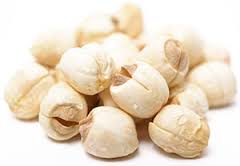
- Fox Nut 芡實
- Hair-like Seaweed 髮菜
- Honey Prune 蜜枣
- Lady Bell Root 沙參
- Lotus Seed 蓮子
- Red Dates or Jujube 红枣/紅棗
- White Fungus 白木耳 or 雪耳

|

|

|
| Fox Nuts | Hair Seaweed | Honey Prune |

|
|

|

|
| Lady Bell Root | Lotus Seeds | Jujube | White Fungus |
Also, check out my Chinese Herbs Page.
Thursday, June 2, 2016
The Real Reason for Bargains is to Eat Well.
When I give you the weekly sales, I don't mean to have you drive around town to get them.
Instead, I want you to stick with your favorite stores but try to grab good deals when you spot them and pay attention to what is on sale recently. (Sorry, this won't work for folks in Southern Hemisphere, such as Aussies and Kiwis.)
See, you think bargains are all just about stretching the dollars and their buying power, right?
Well, that too but not so fast.
For centuries, people know to eat food at their peak, when they are in season.
When the food, especially fresh produces are in season, they grow faster, easier, more delicious and contain more nutrients.
Since they grow easier, the cost is lower and that's why, there are bargains.
Further more, we should eat food that is local and indigenous, if we can help, because these are fresher when we get them, they don't have to travel far and be harvested prematurely.
By eating local food in season, we make it more sustainable for our planet too.
So, by all means, buy the bargains, I mean, enjoy them when they are in season. I am here to help you notice it and prepare it, if you allow me.
Cheers.
Brain Food for Tea Time!
Can we eat to help our brain function better?
Your brain needs vitamins and essential fatty acids to function. They also support your heart and your body's general well being.
When you feel like having something to help you focus in the long, awkward time between lunch and dinner, don't just munch away and let temptation rule you. First defense line to guard your health is snacking mindfully.
Like I mentioned not all calories are created equal. You can snack to really fuel your body and your brain or undermine them.
By the way, the most important thing to help your brain is good sleep. If you are sleep deprived or suffer from insomnia, don't try to eat your problem away. Get some good sleep first. (I'll post something in that regard later.)
Here is a list of food that would help your brain function.
Your brain needs vitamins and essential fatty acids to function. They also support your heart and your body's general well being.
When you feel like having something to help you focus in the long, awkward time between lunch and dinner, don't just munch away and let temptation rule you. First defense line to guard your health is snacking mindfully.
Like I mentioned not all calories are created equal. You can snack to really fuel your body and your brain or undermine them.
By the way, the most important thing to help your brain is good sleep. If you are sleep deprived or suffer from insomnia, don't try to eat your problem away. Get some good sleep first. (I'll post something in that regard later.)
Here is a list of food that would help your brain function.
- Broccoli, Cauliflower - your brain's best friend with high level of vitamin K, which has a great deal of health benefits, including enhancing cognitive functions. Steam it for only 2 to 4 minutes or roast it instead. Sprinkle with chopped garlic, olive oil, and chile flakes for the boost.
- Fish high in EFA's and Omega-3 - oily fish like salmon, sardines, trout, and kippers contain EFA's in a ready-to-use form. Omega-3 supports brain and nerves system and prevent cognitive problems, sleep disorders, learning disabilities and depression. The essential fatty acids from fish and nuts can not be produced by the body and have to be ingested from our diet.
- Fruits high in vitamin C - blackcurrants, tomatoes, blueberries. The antioxidants that your body gets through regularly consuming fruit and vegetables are an important part of your diet, as they improve your cognitive performance and ward off stress, to help you think and learn better – essential for all of us out there. Their high level of vitamin-C that can help nerve cells and brains function better and prevent the onset of Alzheimer's disease.
- Sweet potato or banana for potassium - Potassium is needed for good oxygen flow to the brain to support concentration and productivity. Sweet potato has more potassium than a banana and lower GI for a lower and longer sugar burning boost. Bake it with a sprinkle of salt, Cajun.
- Nuts - they are whole food with low GI, high-protein for brain fuel and they are very filling. Walnuts are a great source of omega-3 fatty acids, like oily fish. However, watch out for the calories as they are, after all, high in calories from oil. Take a moderate amount and don't refill after you finish them.
- Chocolate, the darker the better - not the kind from candy bars. I prefer 80 percent or more and I eat them with pumpkin seeds or nuts such as almonds.
The rest are also good for brain function but may suit better in your meal plan.
- Curry - Turmeric, the spice that gives curry and mustard their yellow color, contains a chemical called curcumin. Research has shown curcumin’s ability to boost memory, slow the progression of Alzheimer’s and stimulate neurogenesis, which is the process of creating new brain cells. It may also clear out amyloid plaques, the brain gunk thought to be a cause of Alzheimer’s, and calm inflammation of brain and nerve cells.
- Chickpeas - They contain high level of magnesium, a mineral that plays a key role in energy metabolism. Magnesium is highly beneficial for brain cell receptors, speeding message transmission. Magnesium also relaxes blood vessels, letting more blood through to feed the brain.
- Buckwheat - buckwheat is a natural mood-calmer because it's high in relaxing tryptophan, providing 25 percent of your recommended allowance in a one-cup serving. Buckwheat is also a good source of magnesium, with 229 mg per serving. (Though some forms of cooking drop the magnesium content.) Technically a fruit seed, buckwheat is gluten-free and high in fiber, so it’s a great grain substitute. Throw it in soups or stews, or cook it and add it to salads. You can even boil it up as a hot breakfast cereal, much like grits or cream of wheat.
Sorry it's a bit long, but when it comes to our brain, we just can't cut corners, eh?


Are You Happy?
And what is happiness? A surge of pleasure because something good happened to you? How long does it last?
We love moments of happiness but no one can sustain happy feelings over time. Moreover, do we want just occasional episodes of happiness, or an overriding sense of contentment, with life, with ourselves?
Social psychologist Sonja Lyubomirsky classified causes of happiness into three major categories: life circumstances, genetics, and behavior. Furthermore, her research shows that only about 10 percent of people's happiness is due to their life circumstances - such as health, getting a raise at work, buying a new house, or getting married. However that's what most of us focus on and try to change to make us happier, or more precisely, to imagine us being happier in the future with those changes. Those changes might make you happy, but perhaps they don't make you as happy as you think they do, or for as long as you imagine.
Most people think that they will be happier if they had more money. Well, it's hard to be truly happy if you live in poverty, below a certain income level.
However, researchers at Princeton University found that after people have somewhere between $60,000 and $75,000 (in 2010), there's no relationship between income and happiness.
So, what makes you happy? Or maybe we should ask, how do we make ourselves happier, for longer?
We love moments of happiness but no one can sustain happy feelings over time. Moreover, do we want just occasional episodes of happiness, or an overriding sense of contentment, with life, with ourselves?
Social psychologist Sonja Lyubomirsky classified causes of happiness into three major categories: life circumstances, genetics, and behavior. Furthermore, her research shows that only about 10 percent of people's happiness is due to their life circumstances - such as health, getting a raise at work, buying a new house, or getting married. However that's what most of us focus on and try to change to make us happier, or more precisely, to imagine us being happier in the future with those changes. Those changes might make you happy, but perhaps they don't make you as happy as you think they do, or for as long as you imagine.
Most people think that they will be happier if they had more money. Well, it's hard to be truly happy if you live in poverty, below a certain income level.
However, researchers at Princeton University found that after people have somewhere between $60,000 and $75,000 (in 2010), there's no relationship between income and happiness.
So, what makes you happy? Or maybe we should ask, how do we make ourselves happier, for longer?
Subscribe to:
Posts
(
Atom
)